Astronomy Basics

Astronomy is the scientific study of celestial objects, such as stars, planets, galaxies, and other phenomena that exist in outer space. It is one of the oldest sciences, with a history dating back thousands of years. Here are some of the basics of astronomy:

  1. Celestial Objects: Astronomy focuses on the observation and study of celestial objects. These objects include stars, planets, moons, asteroids, comets, galaxies, and nebulae.
  2. Solar System: The solar system is a collection of celestial objects that orbit around a central star, the Sun. It includes eight planets, including Earth, as well as their moons, asteroids, and comets.
  3. Stars: Stars are massive, luminous balls of gas that emit energy through nuclear fusion. They are the building blocks of galaxies and vary in size, temperature, and brightness. The Sun is a star.
  4. Planets: Planets are large celestial bodies that orbit around a star. They do not produce their own light but reflect the light of their star. Currently, our solar system has eight planets: Mercury, Venus, Earth, Mars, Jupiter, Saturn, Uranus, and Neptune.
  5. Moons: Moons, also known as natural satellites, are objects that orbit around planets. They are typically much smaller than planets and can have diverse features such as craters, mountains, and even subsurface oceans.
  6. Galaxies: Galaxies are vast systems of stars, gas, and dust held together by gravity. They come in various shapes and sizes, ranging from spiral galaxies like our Milky Way to elliptical and irregular galaxies. The universe contains billions of galaxies.
  7. Nebulae: Nebulae are vast clouds of gas and dust in space. They are often the birthplaces of stars and can have different shapes and colors. Some nebulae can be seen from Earth with the naked eye, while others require telescopes for observation.
  8. Observational Tools: Astronomers use various tools and techniques to study celestial objects. Telescopes, both ground-based and space-based, are used to observe objects in greater detail. Different types of telescopes, such as optical, radio, and X-ray telescopes, allow astronomers to study different wavelengths of light.
  9. Cosmology: Cosmology is a branch of astronomy that deals with the study of the origin, evolution, and structure of the universe as a whole. It seeks to understand the fundamental properties of space, time, and the universe’s composition.
  10. Astronomical Phenomena: Astronomy involves the study of various phenomena, including eclipses, meteor showers, supernovae, black holes, and the expansion of the universe. These events and phenomena provide valuable insights into the workings of the universe.

These are just some of the basics of astronomy. The field is vast and encompasses many sub-disciplines, including astrophysics, planetary science, and astrobiology. Astronomers continue to make new discoveries and expand our understanding of the universe through ongoing research and exploration.
Trigonometry basics

Trigonometry is a branch of mathematics that deals with the relationships between angles and the sides of triangles. It explores the properties and functions of angles, as well as their applications in various fields such as physics, engineering, and navigation.

At its core, trigonometry revolves around six fundamental trigonometric functions: sine (sin), cosine (cos), tangent (tan), cosecant (csc), secant (sec), and cotangent (cot). These functions are defined based on the ratios of the sides of a right triangle.

In a right triangle, which is a triangle with one angle measuring 90 degrees, the three sides are referred to as the hypotenuse, adjacent side, and opposite side. The trigonometric functions are defined as follows:

– Sine (sin): The ratio of the length of the opposite side to the length of the hypotenuse.

– Cosine (cos): The ratio of the length of the adjacent side to the length of the hypotenuse.

– Tangent (tan): The ratio of the length of the opposite side to the length of the adjacent side.

– Cosecant (csc): The reciprocal of the sine function (csc(theta) = 1/sin(theta)).

– Secant (sec): The reciprocal of the cosine function (sec(theta) = 1/cos(theta)).

– Cotangent (cot): The reciprocal of the tangent function (cot(theta) = 1/tan(theta)).

These functions have specific properties and relationships that allow for the calculation of unknown angles or side lengths in a triangle, given known information.

Trigonometry also involves various identities and formulas, such as the Pythagorean identities and the Law of Sines and Law of Cosines, which enable the solution of more complex problems involving triangles and angles.

Beyond triangles, trigonometry has applications in other areas of mathematics, such as calculus, as well as in physics, engineering, astronomy, and many other fields. It provides tools for measuring distances, determining angles, analyzing periodic phenomena, and modeling waveforms, among other uses.

Overall, trigonometry plays a crucial role in both theoretical and practical aspects of mathematics and its applications, making it a fundamental subject in the study of mathematics and related disciplines.

Wrestling

Etymology :

Definition: the sport or activity of grappling with an opponentand trying to throw or hold them down on the ground, typically according to a code of rules.

Definition : sport or contest in which two unarmed individuals struggle hand to hand with each attempting to subdue or unbalance the other.

The three basic types of wrestling contest are the belt-and-jacket, catch-hold, and loose styles.

Wrestling involves different grappling-type techniques such as clinch fighting, throws and takedowns, joint locks, pins, and other grappling holds.

The three basic types of wrestling contest are the belt-and-jacket, catch-hold, and loose styles.

Botany

Etymology : Greek word botane, which means “grass” or “pasture.”

Definition : branch of biology that deals with the study of plants, including their structure, properties, and biochemical processes.

Classification: The 5 classifications in the plant kingdom are thallophyta, bryophyta, pteridophyta, gymnosperms, and angiosperms.

Groups : The 4 major groups of plants are mosses, ferns, flowering plants, and gymnosperms.

Founder : Theophrastus, a Greek philosopher who first studied with Plato and then became a disciple of Aristotle, is credited with founding botany


Taxonomy : Taxonomy is a science that deals with naming, describing and classification of all living organisms including plants. Carolus Linnaeus was a Swedish botanist who was the first to develop a taxonomy.


The importance of Botany can be understood by the following points:

  1. Botany deals with the study of different kinds of plants, its uses and characteristics to influence the fields of science, medicine and cosmetics.
  2. Botany is the key to the development of biofuels such as biomass and methane gas that are used as alternatives to fossil fuels.
  3. Botany is important in the area of economic productivity because it is involved in the study of crops and ideal growing techniques that helps farmers increase crop yield.
  4. The study of plants is also important in environment protection. The Botanists list the different types of plants present on earth and can sense when the plant populations start declining.

Vegetables

Etymology : from Medieval Latin vegetabilis “growing, flourishing,” from Late Latin vegetabilis “animating, enlivening,

Vegetables are parts of plants that are consumed by humans or other animals as food. Vegetables are usually grouped according to the portion of the plant that is eaten such as leaves (lettuce), stem (celery), roots (carrot), tubers (potato), bulbs (onion) and flowers (broccoli).

Vegetable categories :

  • Flower vegetables
  • Leafy vegetables
  • Root vegetables
  • Tuber vegetables
  • Fruit vegetables
  • Bulb vegetables
  • Stem vegetables

Flower Vegetables

Cauliflower, Broccoli, Artichoke, Banana flower, Romanesco broccoli , Zucchini flowers

Leafy Vegetables

  • Cabbage
  • Arugula
  • Spinach
  • Celery
  • Lettuce
  • Coriander leaves
  • Mint
  • Spring onion
  • Bok choy
  • Romaine lettuce
  • Rapini
  • Mustard greens
  • Kale

List of Flower Vegetable Names

Given below is a list of flower vegetables for your reference. Check them out.

  • Cauliflower
  • Broccoli
  • Artichoke
  • Banana flower
  • Romanesco broccoli
  • Zucchini flowers

List of Leafy Vegetable Names

Here is a list of edible leafy vegetables. Go through them.

Leafy Vegetables

  • Cabbage
  • Arugula
  • Spinach
  • Celery
  • Lettuce
  • Coriander leaves
  • Mint
  • Spring onion
  • Bok choy
  • Romaine lettuce
  • Rapini
  • Mustard greens
  • Kale

List of Root Vegetable Names

Check out the list of root vegetable names given below.

Root Vegetables

  • Beetroot
  • Carrot
  • Turnip
  • Radish
  • White radish
  • Celeriac
  • Rutabaga/Swede
  • Sugar beet
  • Parsnip
  • Horseradish

List of Tuber Vegetable Names

Learn the names of various tuber vegetables from the list given below.

Tuber Vegetables

  • Potato
  • Tapioca
  • Arracacia
  • Elephant yam
  • Ginger
  • Greater yam
  • Turmeric
  • Purple yam
  • Chinese potato
  • Arrowroot

List of Fruit Vegetable Names

Check out the following list of fruit vegetable names.

Fruit Vegetables

  • Cucumber
  • Pumpkin
  • Tomato
  • Peppers
  • Eggplant
  • String beans
  • Green peas
  • Corn
  • Lady’s finger
  • Beans
  • Chickpeas

List of Bulb Vegetable Names

Another category of vegetables is bulb vegetables. Check out the following list to know which vegetable comes under this category.

Bulb Vegetables

  • Onion
  • Garlic
  • Leek
  • Fennel
  • Spring onions

List of Stem Vegetable Names

Given below is a list of stem vegetable names for your reference. Check them out.

Stem Vegetables

  • Asparagus
  • Lemon grass
  • Celery
  • Kohlrabi
  • Celtuce
  • Rhubarb
  • Swiss chard
  • Cardoon

Biology

The word ‘Biology’ is obtained from the words of the ancient Greek language. The Greek words ‘Bios’ means ‘life’ and ‘logos’ means ‘to study’ or simple ‘study’.

Biology is the branch of science that primarily deals with structure, function, growth, evolution, and distribution of organisms.

Biology encompasses diverse fields, including botany, conservation, ecology, evolution, genetics, marine biology, medicine, microbiology, molecular biology, physiology, and zoology

The foundation of biology as it exists today is based on five basic principles. They are the cell theory, gene theory, evolution, homeostasis, and laws of thermodynamics.

  • Cell theory : all living organisms are composed of cells. The cell is the basic unit of life.
  • Gene Theory: traits are inherited through gene transmission. Genes are located on chromosomes and consist of DNA.
  • Evolution: any genetic change in a population that is inherited over several generations. These changes may be small or large, noticeable or not so noticeable.
  • Homeostasis: ability to maintain a constant internal environment in response to environmental changes.
  • Thermodynamics: energy is constant and energy transformation is not completely efficient.

The First Law of Biology: all living organisms obey the laws of thermodynamics. The laws of thermodynamics govern energy transformations and mass distributions.

The Second Law of Biology: all living organisms consist of membrane-encased cells. Enveloping membranes allow physical separation between the living and the non-living worlds. Viruses, plasmids, transposons, prions, and other selfish, biological entities are not alive

The Third Law of Biology: all living organisms arose in an evolutionary process. This law correctly predicts the relatedness of all living organisms on Earth.


an organism is known to be a living thing. Therefore, a living organism can be defined as anything that has life and consists of cells as its basic unit of organization. Examples of living organisms include humans, fungi, algae, trees, animals, bacteria, protozoa, and insects.

There are seven characteristics of living things: movement, breathing or respiration, excretion, growth, sensitivity and reproduction. Some non-living things may show one or two of these characteristics but living things show all seven characteristics.


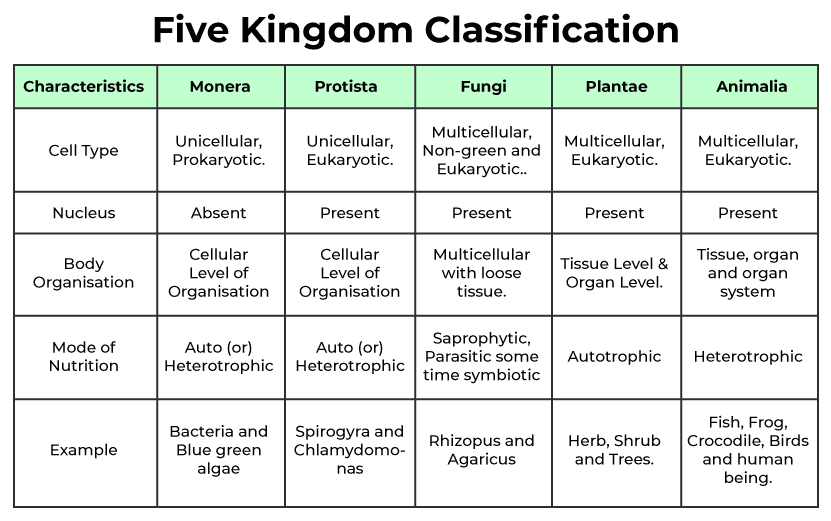
these are the biological classifications domain, kingdom, phylum (plural, phyla), class, order, family, genus (plural, genera), and species.

Sports

Basketball , Soccer , Baseball , American football , Cricket , Golf , Tennis , Volleyball , Ice Hockey , Boxing , Rugby , Badminton , Table Tennis ( Ping Pong ) , Archery , Handball , Lacrosse , Gymnastics , Weightlifting , Rowing , Swimming , Water pollo , Judo , Wrestling , Cycling


Basketball

Soccer

Baseball

American football

Cricket

Golf

Tennis

Volleyball

Ice Hockey

Boxing

Rugby

Badminton

Table Tennis ( Ping Pong )

Archery

Handball

Lacrosse

Gymnastics

Weightlifting

Rowing

Swimming

Water pollo

Judo

Wrestling

Cycling

Sciences

Science (from Latin scientia, meaning “knowledge”) is a systematic enterprise that builds and organizes knowledge in the form of testable explanations and predictions about the universe.


Biology , Chemistry , Physics , Mathematics , Astronomy , Earth Science , Bio Chemistry , psychology , Geology , Economics , Computer Science , Anthropology , Social Science , Sociology , NeuroScience , Geography , Statistic , Biophysics , Microbiology , Botany , genetics ,


Biology

Biology is the overall natural science that studies life, with the other life sciences as its sub-disciplines.

Chemistry

Chemistry is often called “the central science” because of its role in connecting the other natural sciences.

Physics

Physics – study of matter and its motion through spacetime, along with related concepts such as energy and force.

Mathematics

Mathematics is the study of numbers, equations, functions and geometric shapes and their relationships,

Astronomy

Astronomy – study of celestial objects (such as stars, planets, comets, nebulae, star clusters and galaxies) and phenomena that originate outside the Earth’s

Earth Science

Earth science concerns itself with the physical constitution of the planet.

Biochemistry

Biochemistry, The study of the organic chemistry of compounds and processes occurring in organisms. Biology, The science that studies living organisms.

Psychology

Psychology majors work to understand human behavior and mental processes.

Geology

Geology – study of the Earth, with the general exclusion of present-day life, flow within the ocean, and the atmosphere

Economics

Economics is a social science that seeks to analyze and describe the production, distribution, and consumption of wealth.

Computer science

Computer Science, The systematic study of computing systems and computation.

Anthropology

Anthropology is the holistic “science of man”, a science of the totality of human existence. The Study of humans

Social science

Social science is the study of societies and individuals.

Sociology

Sociology majors study human societies to answer questions about social change, disorder in society, and social stratification.

Neuroscience

Geography

Geography – study of the Earth and its lands, features, inhabitants, and phenomena. A literal translation would be “to describe or write about the Earth”

Statistics

Biophysics

Biophysics – study of physical processes relating to biology.

Microbiology

Microbiology, The study of microorganisms, including viruses, prokaryotes and simple eukaryotes.

Botany

Botany, also called plant science , plant biology or phytology, is the science of plant life and a branch of biology.

Genetics

The science of heredity.

Board Games

Catan , Ticket to Ride , Monopoly , Chess , Pandemic , Scrabble , Carcassonne , 7 Wonders , Checkers , Cluedo , Risk , Candy Land , Codenames , Backgammon , Battleship , Yahtzee , Boggle , Blokus , Azul , Trivial Pursuit , Sorry! , Agricola , Guess Who? , Wingspan


Catan

Ticket to Ride

Monopoly

Chess

Pandemic

Scrabble

Carcassonne

7 Wonders

Checkers

Cluedo

Risk

Candy Land

Codenames

Backgammon

Battleship

Yahtzee

Boggle

Blokus

Azul

Trivial Pursuit

Sorry!

Agricola

Guess Who?

Wingspan

Card Games

Trick-taking game , Contract bridge , Cribbage , Hearts , Poker , Whist , Bezique, Rummy , Euchre , Skat , Blackjack , Spades , Gin rummy , Piquet , Canasta , Oh Hell , Ninety-nine , Pitch , Patience , All Fours , My Ship Sails , Briscola , Gong Zhu , Barbu , Écarté , Golf , Court piece , Bourré , Sergeant Major , Spite and Malice , Crazy Eights , Nerts , Baccarat , Big two , Pinochle , Black Maria , Cheat , Go Fish , Knock-out whist , 500 , Skip-Bo , Eleusis , Schnapsen , Sixty-Six , Truc , Jass , Egyptian Ratscrew , Cassino , Costly , Colours , Belote , Sheepshead


Trick-taking game

Contract bridge

Cribbage

Hearts

Poker

Whist

Bezique

Rummy

Euchre

Skat

Blackjack

Spades

Gin rummy

Piquet

Canasta

Oh Hell

Ninety-nine

Pitch

Patience

All Fours

My Ship Sails

Briscola

Gong Zhu

Barbu

Écarté

Golf

Court piece

Bourré

Sergeant Major

Spite and Malice

Crazy Eights

Nerts

Baccarat

Big two

Pinochle

Black Maria

Cheat

Go Fish

Knock-out whist

500

Skip-Bo

Eleusis

Schnapsen

Sixty-Six

Truc

Jass

Egyptian Ratscrew

Cassino

Costly Colours

Belote

Sheepshead

Create your own website, free on WordPress.com.Create your own website.
Start free