The word ‘Biology’ is obtained from the words of the ancient Greek language. The Greek words ‘Bios’ means ‘life’ and ‘logos’ means ‘to study’ or simple ‘study’.
Biology is the branch of science that primarily deals with structure, function, growth, evolution, and distribution of organisms.
Biology encompasses diverse fields, including botany, conservation, ecology, evolution, genetics, marine biology, medicine, microbiology, molecular biology, physiology, and zoology
The foundation of biology as it exists today is based on five basic principles. They are the cell theory, gene theory, evolution, homeostasis, and laws of thermodynamics.
- Cell theory : all living organisms are composed of cells. The cell is the basic unit of life.
- Gene Theory: traits are inherited through gene transmission. Genes are located on chromosomes and consist of DNA.
- Evolution: any genetic change in a population that is inherited over several generations. These changes may be small or large, noticeable or not so noticeable.
- Homeostasis: ability to maintain a constant internal environment in response to environmental changes.
- Thermodynamics: energy is constant and energy transformation is not completely efficient.
The First Law of Biology: all living organisms obey the laws of thermodynamics. The laws of thermodynamics govern energy transformations and mass distributions.
The Second Law of Biology: all living organisms consist of membrane-encased cells. Enveloping membranes allow physical separation between the living and the non-living worlds. Viruses, plasmids, transposons, prions, and other selfish, biological entities are not alive
The Third Law of Biology: all living organisms arose in an evolutionary process. This law correctly predicts the relatedness of all living organisms on Earth.
an organism is known to be a living thing. Therefore, a living organism can be defined as anything that has life and consists of cells as its basic unit of organization. Examples of living organisms include humans, fungi, algae, trees, animals, bacteria, protozoa, and insects.
There are seven characteristics of living things: movement, breathing or respiration, excretion, growth, sensitivity and reproduction. Some non-living things may show one or two of these characteristics but living things show all seven characteristics.
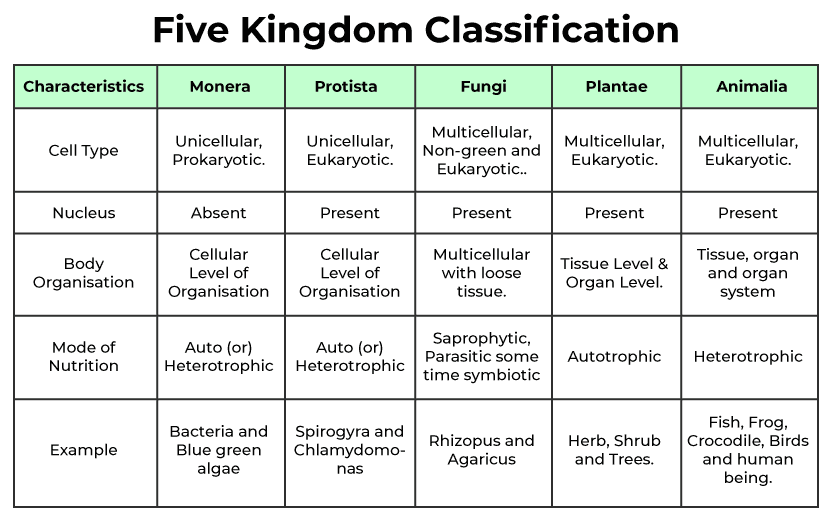
these are the biological classifications domain, kingdom, phylum (plural, phyla), class, order, family, genus (plural, genera), and species.
 More Knowing